The Two Stories:
The Farm Labor Project and the Vanguard Civil Liberties Controversy
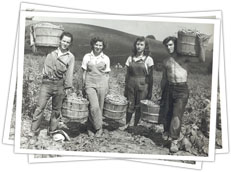
In the first episode, the historical narrators describe participating in Brooklyn College's Farm Labor Project. These students, children of immigrants, chose to support the war effort on the homefront by working on farms in Upstate New York picking peas and beans during the summers of 1942, '43, and '44. "Feed a Fighter in '44" was one of the Project's slogans. In their accounts, the students describe the hard work of farming; encounters with America's migrant farm labor;the experience of being the "other" in small homogenous farming communities; and the adventure of living away from home, immigrant families, and urban life for the first time.
In the second episode, the students chronicle their experiences with the Vanguard, the college newspaper, during a period in which civil liberties were threatened on college campuses around the country. These student journalists, some of whom were World War II veterans, were involved with the Vanguard when President Harry Gideonse of Brooklyn College shut it down and suspended several of its writers and editors. The closure was the culmination of an ongoing struggle over the newspaper's content. The Vanguard journalists, an eclectic group of civil libertarians with a range of political orientations, asserted that the president closed the paper in order to squelch student opinions that did not conform to those of the administration. Gideonse, they charged, had brought the Cold War to the college.